35 Fun Facts About Christmas 2026 That Will Surprise You
Discover the 35 fun facts about Christmas that might make you laugh or say, “I didn’t know that!” Perfect for sharing with family and friends over the festive season.

Get ready to discover 35 amazing fun facts about Christmas you probably never knew. This list is full of interesting facts about Christmas, from bizarre traditions to the origin of iconic Christmas songs!
Christmas is that magical time of year when twinkling lights, festive music, and the smell of fresh pine fill the air. But beyond the gifts, carols, and cozy traditions, there are plenty of surprising tidbits that most people probably don’t know.
For example, did you know that Christmas wasn’t always celebrated on December 25, or that the average American spends nearly $1,000 each year on holiday gifts?
Some of these Christmas fun facts might make you laugh, while others might make you say, “I didn’t know that!” Either way, they’re perfect for sharing with family and friends during the festive season, giving you fun and interesting topics to chat about over Christmas dinner.
So grab a cup of cocoa, get comfy, and let’s dive into 25 Christmas facts that are as fun as they are fascinating.
35 Fun Facts About Christmas: A Quick Overview
Christmas is celebrated on December 25 by Christians around the world to mark the birth of Jesus Christ. Over time, it has also become a cultural holiday associated with gift-giving, festive decorations, special meals and traditions that vary from country to country.
Here are some quick facts about Christmas:
- Christmas is celebrated on: December 25 in many countries.
- The first recorded celebration in Rome: The Christian church observed Christmas on December 25 by 336 AD.
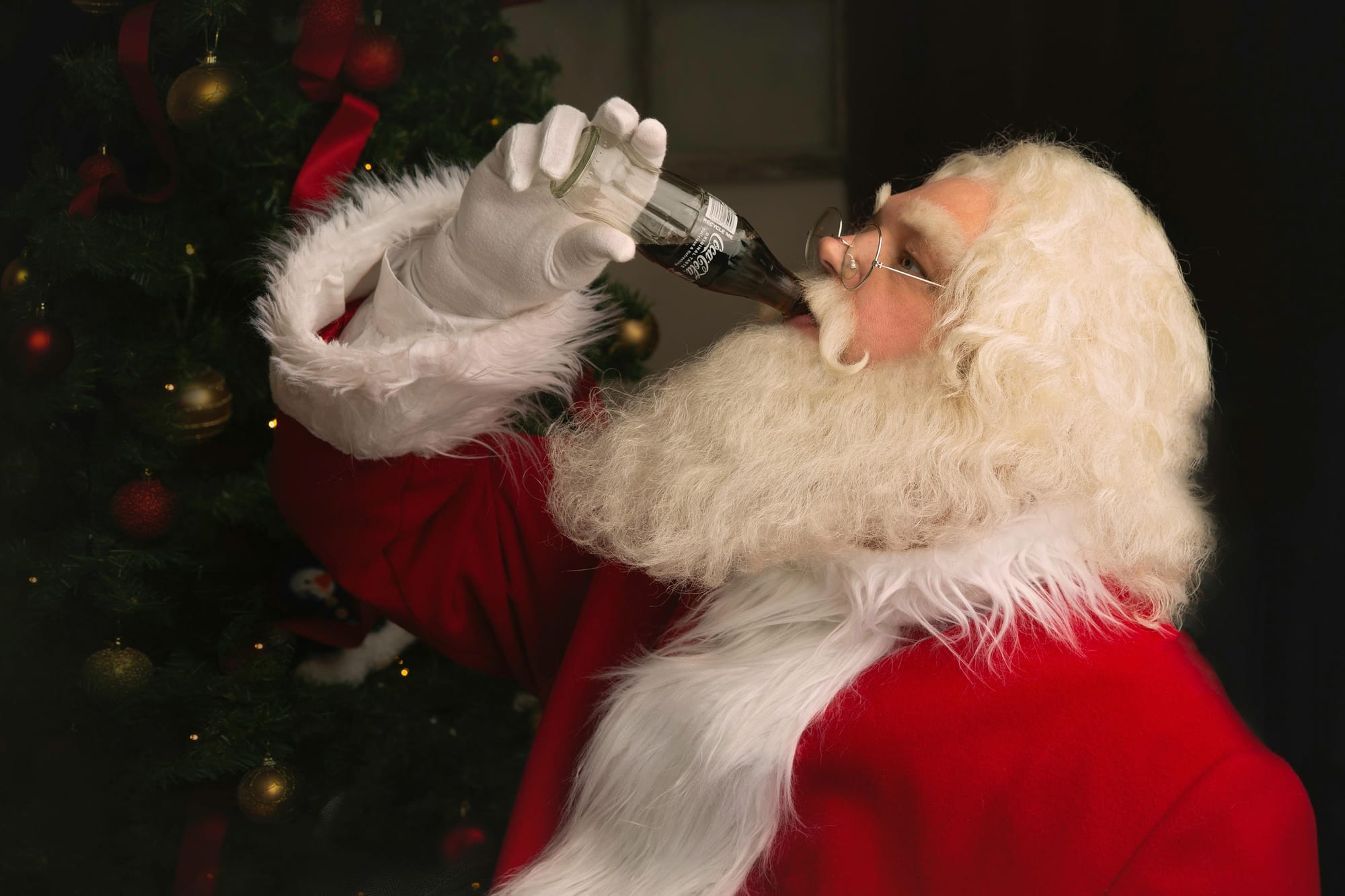
- Santa's modern image: Coca-Cola advertising helped popularize the familiar jolly Santa in the 1930s.
- NORAD's Santa tracker: The tradition began by accident in 1955.
- The tallest cut Christmas tree on record: A 64.6-metre (212-foot) Douglas fir displayed in Seattle in 1950.
- Christmas in Australia: It takes place during the Southern Hemisphere's summer.
Christmas History Facts
Christmas has a long history shaped by religious observances and seasonal celebrations. These facts explain how the holiday developed and where some familiar customs came from.
1. Christmas Was Celebrated on December 25 by 336 AD
The Christian church in Rome was observing the Feast of the Nativity on December 25 by 336 AD. The Bible does not specify the exact date of Jesus's birth, so historians cannot confirm that he was born on that day.
The date became established as the traditional day to celebrate Christmas and gradually spread to Christian communities in other parts of the world.
2. The Word "Christmas" Comes From "Christ's Mass"
The word Christmas comes from the Old English phrase Cristes maesse, meaning "Christ's Mass." The name reflects the Christian religious service held to celebrate the birth of Jesus.
Over centuries, the word became the familiar name for the holiday and its wider cultural celebrations.
3. The Bible Does Not Give Jesus's Exact Birth Date
Although Christmas is celebrated on December 25, the Bible does not state the date or month of Jesus's birth. December 25 became the traditional date adopted by the early Christian church.
The reason this date was selected is still discussed by historians. Its timing coincided with established midwinter festivals in the Roman world, but there is no single explanation accepted by all scholars.
4. Ancient Roman Festivals Influenced Some Christmas Customs
The ancient Roman festival of Saturnalia was celebrated in December in honor of Saturn, the god of agriculture. It involved feasting, social gatherings and gift-giving.
Christmas developed in a world where midwinter celebrations were already part of cultural life. Some seasonal customs associated with these older festivals became intertwined with later Christmas traditions, although the precise origins of individual customs can be difficult to establish.
5. Christmas Was Not Always a Major Christian Holiday
In the early centuries of Christianity, Easter was more important in the religious calendar than Christmas. The celebration of Jesus's birth became more established over time, with December 25 recorded as the date of the Nativity feast in Rome by 336 AD.
6. Christmas Traditions Combine Religious and Cultural Customs
Modern Christmas celebrations include religious services, family gatherings, gift exchanges, festive meals, music and decorations. Not every tradition has the same origin: some are connected to Christian observance, while others developed through local customs and seasonal celebrations.
That mix is one reason Christmas looks different around the world.
Santa Claus Facts
Santa Claus is one of the best-known symbols of Christmas. But the character's familiar appearance and the traditions surrounding him have developed over many years.
7. Santa Claus Is Inspired by Saint Nicholas
The Santa Claus tradition is linked to Saint Nicholas, a Christian bishop from Myra, in what is now Turkey. Stories about his generosity and gift-giving helped shape the figure who later became known as Santa Claus.
The name Santa Claus is commonly connected to the Dutch name Sinterklaas, a form of Saint Nicholas.
8. Coca-Cola Did Not Invent Santa's Red Suit
One popular Christmas myth is that Coca-Cola invented Santa's red outfit. That is not true. Santa had appeared in red clothing in illustrations before the company's famous Christmas advertisements.
However, Coca-Cola's advertising helped popularize the cheerful, round-bellied Santa with a white beard and red suit that many people recognize today.
9. Coca-Cola's Famous Santa Advertisements Began in 1931
In 1931, Coca-Cola commissioned illustrator Haddon Sundblom to create Santa Claus illustrations for its Christmas advertising. Sundblom's artwork portrayed Santa as warm, friendly and human-like.
The illustrations appeared in advertising for decades and helped establish the familiar modern image of Santa.
10. NORAD Has Tracked Santa Since 1955
The NORAD Tracks Santa tradition began after a child accidentally called the Continental Air Defense Command (CONAD) while trying to reach Santa. The commander on duty, Colonel Harry Shoup, played along and arranged for staff to give the child updates on Santa's location.
When NORAD was formed in 1958, the tradition continued. Today, families can follow the annual Santa-tracking feature on Christmas Eve.
11. Santa Has Different Names Around the World
Santa Claus is known by different names in different countries. In the United Kingdom, he is also called Father Christmas. In the Netherlands, the traditional gift-bringer is Sinterklaas, while other countries have their own festive characters and customs.
These names reflect the way local folklore and traditions have shaped Christmas celebrations.
Christmas Tree and Decoration Facts
Christmas trees, lights, ornaments and wreaths are familiar sights during the holiday season. Their history is a mix of older evergreen customs and more recent festive traditions.
12. Evergreen Plants Have Long Been Used in Winter Celebrations
Evergreen plants such as pine, fir and holly stay green through winter. Different cultures have used them as seasonal decorations, particularly during the darkest months of the year.
The use of evergreens in winter celebrations predates many modern Christmas decorations.
13. The Modern Christmas Tree Tradition Is Closely Associated With Germany
The decorated indoor Christmas tree is commonly associated with German-speaking parts of Europe. The custom spread to other countries over time and became a central feature of many modern Christmas celebrations.
Today, families decorate trees with lights, baubles, ribbons and ornaments, often adding personal decorations collected over the years.
14. The World's Tallest Cut Christmas Tree on Record Was in Seattle
According to Guinness World Records, the tallest cut Christmas tree on record was a 64.6-metre (212-foot) Douglas fir displayed at Northgate Shopping Center in Seattle, Washington, in December 1950.
The tree was decorated with 3,600 lights. It had been cut on Mount Rainier and transported to the shopping center, where its branches were reattached and additional branches were used to fill out its shape.
15. Christmas Lights Were Once More Complicated to Use
Before electric Christmas lights became widely available, people sometimes used candles to illuminate Christmas trees. This created a fire risk and required careful supervision.
Electric lights offered a safer and more convenient way to decorate trees and homes, helping festive lighting become a widespread tradition.
16. Mistletoe Is Associated With Christmas Kissing Traditions
Mistletoe is a plant traditionally used as a festive decoration. In some English-speaking Christmas traditions, people kiss beneath a sprig of mistletoe.
The custom has connections to older European folklore, although its exact history and development are not entirely clear.

Christmas Music and Entertainment Facts
Christmas music is part of the holiday atmosphere, from traditional carols to modern pop songs. Some festive favorites have histories that may surprise you.
17. "Jingle Bells" Was Not Originally Written as a Christmas Song
"Jingle Bells" is strongly associated with Christmas today, but it was not originally written specifically as a Christmas song. Its lyrics focus on a sleigh ride, making it a winter-themed song that later became a holiday favorite.
18. Christmas Carols Have Religious and Community Roots
Traditional Christmas carols developed from religious songs and community singing. They have been performed in churches, homes and public spaces for generations.
Different countries have their own carols, musical styles and languages, giving Christmas music a distinctly local character around the world.
19. Christmas Music Is Performed in Many Languages
Christmas songs are not limited to English. Around the world, people sing festive music in languages including Spanish, German, French, Italian and many others.
Some songs are translated across languages, while others are traditional to a particular country or region.
Christmas Traditions Around the World
Christmas is celebrated in many countries, but the food, weather, decorations and customs can be very different. These facts show how local culture shapes the festive season.
20. Christmas Happens During Summer in Australia
Christmas falls in summer in Australia because the country is in the Southern Hemisphere. Instead of a snowy holiday, many Australians celebrate with warm-weather activities, outdoor gatherings and trips to the beach.
If you would prefer a sunny festive getaway, explore these best places to travel in December for destination inspiration.
21. Iceland Has 13 Yule Lads
Icelandic Christmas folklore features 13 Yule Lads, known as Jólasveinar. They visit children on the nights leading up to Christmas, with each character having a distinct personality and name.
In the traditional custom, children leave a shoe in the window. Well-behaved children may receive a small gift, while those who have misbehaved may find a potato.
22. Italy Has a Christmas Gift-Bringer Called La Befana
In Italian folklore, La Befana is an old woman who delivers gifts to children on the night before Epiphany, celebrated on January 6. Her story is an important part of the Italian festive season.
Italy's Christmas celebrations also include nativity scenes, seasonal food and local traditions. You can discover more festive destinations in our guide to the best places to travel in Europe in December.
23. Christmas Is Celebrated in Different Ways Across the United States
Christmas traditions in the United States vary by region and family. Popular customs include decorating homes with lights, visiting Christmas markets, attending seasonal performances and displaying decorated trees.
Some cities are particularly famous for their festive attractions. For more seasonal travel inspiration, see our guide to the best places to visit in the US in December.
24. Christmas Markets Are a Popular European Tradition
Christmas markets are a seasonal feature in many European towns and cities. Visitors can browse stalls selling decorations, crafts, gifts and local food, often in historic squares decorated with festive lights.
The markets vary from place to place, so each destination offers a different atmosphere and selection of regional treats.
25. Not Everyone Celebrates Christmas on December 25
Many Western Christian communities celebrate Christmas on December 25. However, some Eastern Orthodox churches follow the Julian calendar for religious observances, meaning their Christmas celebrations fall on January 7 in the Gregorian calendar.
The date therefore depends on the church tradition and calendar being followed.
26. Christmas Can Be a Beach Holiday
In countries where December falls during summer, Christmas can mean sunshine, swimming and outdoor celebrations rather than snow and cold weather.
Destinations in the Southern Hemisphere and tropical regions offer a different kind of festive escape. If you are planning a warm-weather holiday, take a look at these warm places to visit in December.
Christmas Food Facts
Festive food is an important part of Christmas in many cultures. From sweet treats to traditional main courses, holiday menus often reflect local ingredients and family customs.
27. Christmas Food Traditions Vary Around the World
There is no single Christmas menu shared by every country. Some families serve roast turkey, while others prepare seafood, pork, regional pastries or meat-free dishes.
The food served often reflects local ingredients, religious customs and family traditions.
28. Gingerbread Has a Long History in European Baking
Gingerbread is a familiar festive treat, often shaped into people, houses and decorative ornaments. Spiced baked goods have a long history in Europe, and gingerbread became associated with seasonal celebrations in several countries.
Today, gingerbread houses and cookies are popular Christmas activities for families.
29. Christmas Pudding Is a Traditional British Festive Dessert
Christmas pudding is a rich British dessert traditionally made with dried fruit, spices and other ingredients. It is often prepared ahead of Christmas and served as part of the holiday meal.
Recipes vary between households, and some families maintain their own traditions for making and serving it.
30. Festive Meals Often Reflect Local Seasonal Ingredients
Christmas menus are shaped by what is available locally and by the season. In colder climates, hearty roasts and baked dishes are common, while warmer destinations may feature fresh produce, seafood and outdoor meals.
This is one reason Christmas food can look so different from one country to another.
More Surprising Christmas Facts
Some Christmas facts are less about history and more about the unexpected ways people celebrate the holiday.
31. Christmas Is Both a Religious and a Cultural Holiday
For Christians, Christmas is a religious celebration of the birth of Jesus. For many others, it is also a cultural holiday centered on family, generosity, decorations, music and shared meals.
People around the world may take part in Christmas traditions even if they do not observe the religious meaning of the day.
32. Christmas Celebrations Can Last Beyond December 25
In many traditions, Christmas is not limited to Christmas Day. Celebrations may begin weeks earlier with Advent and continue into the days after December 25.
In some Christian traditions, the festive season extends to Epiphany on January 6, while local customs may continue beyond that date.
33. Christmas Decorations Can Reflect Local Culture
Not every Christmas decoration looks the same. Some places favor evergreen wreaths and red-and-green ornaments, while others use locally meaningful symbols, handmade crafts or decorations suited to warmer climates.
These details make festive displays a reflection of local culture as well as holiday style.
34. Christmas Is Celebrated in Countries With Very Different Climates
Christmas takes place during winter in much of the Northern Hemisphere and summer in much of the Southern Hemisphere. That means the same holiday can involve snow-covered streets in one country and sunny beaches in another.
The weather often influences what people eat, wear and do during the festive season.
35. Christmas Traditions Keep Evolving
Christmas customs are not fixed. New decorations, songs, travel habits and ways of celebrating emerge over time, while older traditions continue in families and communities.
That combination of old and new is part of what makes Christmas recognizable around the world while still feeling different from place to place.
Explore Christmas Around the World
Christmas is a wonderful time to explore new destinations, experience local traditions and enjoy festive celebrations.
Whether you want to visit Europe's famous Christmas markets, see holiday lights in the United States or spend the season somewhere warm, there are plenty of ways to make the holidays memorable.
If you're planning a festive getaway, explore our guides to cheap places to travel in December and discover destinations that suit your travel style and budget.
Christmas Trivia: How Much Do You Know?
Think you know everything about Christmas? Take this 7-question quiz and test your festive knowledge! Choose your answers and reveal your score at the end.
Travel Smarter This Christmas - Stay Connected with Jetpac eSIM
Planning to explore Christmas markets in Europe, enjoy festive celebrations in Japan or spend the holidays somewhere warm? Staying connected while traveling can make your trip much easier.
With Jetpac eSIM for international travel, you can access mobile data abroad without having to purchase a physical SIM card or rely on expensive international roaming.
Use your connection to navigate unfamiliar streets, check Christmas market opening hours, book transportation, stay in touch with family and share your festive travel memories.
Jetpac offers international eSIM plans with coverage in over 200 Destinations, helping you stay connected across destinations during the holiday season.
Make your next Christmas trip easier with Jetpac. Explore international eSIM plans before you travel.

FAQs
What are 5 interesting facts about Christmas?
Five interesting facts about Christmas are:
- The Christian church in Rome observed Christmas on December 25 by 336 AD.
- The word Christmas comes from the Old English phrase Cristes maesse, meaning "Christ's Mass."
- Coca-Cola did not invent Santa's red suit, but its 1930s advertisements helped popularize his modern image.
- NORAD's tradition of tracking Santa began accidentally in 1955.
- The tallest cut Christmas tree on record was a 64.6-metre (212-foot) Douglas fir displayed in Seattle in 1950.
Why is Christmas celebrated on December 25?
Christmas is celebrated on December 25 to mark the birth of Jesus Christ. The Bible does not give an exact date for his birth, but the Christian church in Rome was observing the Nativity on December 25 by 336 AD. The date later became widely established in Christian traditions.
Did Coca-Cola invent Santa Claus?
No. Coca-Cola did not invent Santa Claus or his red outfit. Santa had appeared in different forms and clothing colors before the company began its famous Christmas advertisements. Its illustrations, created by Haddon Sundblom from 1931, helped popularize the familiar cheerful image of Santa.
When did NORAD start tracking Santa?
NORAD's Santa-tracking tradition began in 1955, when a child accidentally called the Continental Air Defense Command while trying to reach Santa. The commander on duty decided to play along and provide the child's location updates. The tradition continued when NORAD was established in 1958.
Which country celebrates Christmas in summer?
Countries in the Southern Hemisphere, including Australia and New Zealand, celebrate Christmas during summer. December falls in their warmer season, so celebrations may include outdoor gatherings, barbecues and beach trips rather than snowy activities.
What are some unusual Christmas traditions around the world?
Some unusual Christmas traditions include Iceland's 13 Yule Lads, Italy's La Befana gift-bringer and Australia's summer Christmas celebrations. These customs show how different countries have developed their own ways of celebrating the holiday.
Was Christmas ever illegal?
Yes. Christmas celebrations were banned in England during the 17th century under Puritan rule. Similar restrictions were introduced in parts of colonial America. The bans were eventually lifted.
Is Christmas celebrated on the same date everywhere?
No. Many Christian communities celebrate Christmas on December 25, while some Eastern Orthodox churches that follow the Julian calendar celebrate it on January 7 in the Gregorian calendar. The date depends on the religious calendar and tradition followed.
Get connected as soon as you land with a Jetpac travel eSIM.