30 Christmas Traditions Around the World You Should Know in 2026
Take a trip around the world through 25 Christmas traditions, from Iceland's Yule Lads and Italy's La Befana to Australia's summer celebrations.

Christmas traditions around the world are shaped by centuries of folklore, faith and climate. In some countries, the season revolves around trees, stockings and a family dinner. In others, it means gift-bringing witches, carved radishes, roller-skating to church or a fried-chicken feast on Christmas Eve.
This guide covers 30 Christmas traditions from five continents. For each one you’ll find what it is, when it happens and, where it applies, where you can see it in person if you’re travelling this season.

Christmas traditions around the world at a glance
| Tradition | Country | When | Category |
|---|---|---|---|
| Advent calendars | Germany | 1–24 December | Family |
| St. Lucia Day | Sweden | 13 December | Culture |
| Krampus | Austria | 5 December | Folklore |
| The 13 Yule Lads | Iceland | 12–24 December | Folklore |
| La Befana | Italy | 5–6 January | Culture |
| El Gordo Lottery | Spain | 22 December | Community |
| Caga Tió | Catalonia | 8–24 December | Family |
| Wigilia | Poland | 24 December | Food |
| Christmas Eve carp | Czechia | 24 December | Food |
| Spider decorations | Ukraine | Christmas season | Craft |
| Hiding the brooms | Norway | 24 December | Folklore |
| The hidden almond | Finland | Christmas | Food |
| Réveillon | France | 24 December | Food |
| Las Posadas | Mexico | 16–24 December | Community |
| Night of the Radishes | Mexico | 23 December | Art |
| Roller-skating to Mass | Venezuela | 16–24 December | Community |
| KFC for Christmas | Japan | 24 December | Food |
| Giant Lantern Festival | Philippines | December | Festival |
| Christmas on the beach | Australia | 25 December | Outdoors |
| Summer barbecues | New Zealand | 25 December | Outdoors |
| Night of the Little Candles | Colombia | 7 December | Community |
| Ganna | Ethiopia | 7 January | Faith |
| Christmas crackers | United Kingdom | 25 December | Family |
| Stockings and Santa | United States | 24–25 December | Family |
| Christmas boats | Greece | Christmas season | Culture |
| Sinterklaas | Netherlands | 5–6 December | Family |
| Wren Day | Ireland | 26 December | Community |
| Letters to Santa | Canada | By mid-December | Family |
| Parrandas | Puerto Rico | December to January | Music |
| The Christmas braai | South Africa | 25 December | Outdoors |
These 30 Christmas traditions around the world span every belief system, climate zone, and family celebration type imaginable.
1. Germany - Advent Calendars
When: 1–24 December
Advent calendars began in 19th-century German Lutheran homes, where families counted the days of December with chalk marks on the door. Printed calendars followed. Today, the little doors hide chocolate, toys or small gifts, and the custom has spread around the world.
In many German homes, presents are brought on Christmas Eve by the Christkind, an angelic figure, rather than by Santa. Germany is also home to some of the world’s best-known Christmas markets, which you can read about in our guide to Germany’s Christmas markets. For more about the country, see our fun facts about Germany.
2. Sweden - St. Lucia Day
When: 13 December | Where to see it: churches, schools and concert halls across Sweden
On St. Lucia Day, a girl wearing a crown of candles leads a procession of white-robed singers through schools, churches and care homes. They sing traditional Lucia songs, and saffron buns called lussekatter are served at breakfast. The candlelight brings warmth to Sweden’s darkest mornings.
Two newer Swedish traditions are just as well known:
- The Gävle Goat. In the town of Gävle, a giant straw goat goes up each year, and people wait to see whether it survives the season without being set alight.
- Donald Duck. At 3pm on Christmas Eve, families gather to watch an hour-long Donald Duck special on television.
If you’re visiting, see our guide to things to do in Stockholm.
3. Austria - Krampus
When: 5 December | Where to see it: Salzburg and towns across Austria and Bavaria
On Krampusnacht, the night before St. Nicholas Day, costumed figures with horns, fur, bells and chains parade through Alpine towns alongside St. Nicholas. In folklore, Krampus punishes naughty children while St. Nicholas rewards the good ones. The tradition has pre-Christian Alpine roots and still draws large crowds today.
4. Iceland - The 13 Yule Lads
When: 12–24 December
Iceland’s Jólasveinar, the Yule Lads, arrive one per night over the 13 nights before Christmas. Each one is named after a mischievous habit, such as stealing sausages or slamming doors. Children leave a shoe on the windowsill and wake to a small gift if they’ve been good, or a rotten potato if they haven’t.
Iceland also has the Jólakötturinn, the Yule Cat, a giant cat said to eat anyone who hasn’t received new clothes for Christmas.
5. Italy - La Befana
When: 5–6 January
La Befana is a kindly old woman on a broomstick who fills children’s stockings with sweets on the night of 5 January, the eve of Epiphany. Epiphany itself is a national holiday in Italy.
Nativity scenes, known as presepi, are just as important. Some are elaborate village scenes with moving figures. Many Italian and Italian-American families also mark Christmas Eve with the Feast of the Seven Fishes, a meal of several seafood dishes. For more about the country, see our fun facts about Italy.
6. Spain - El Gordo Christmas Lottery
When: 22 December
El Gordo, “the fat one”, is Spain’s huge Christmas lottery. Instead of one big jackpot, the prize money is spread across many winning tickets, so whole offices, families and villages buy shares together. The draw is broadcast live, and the winning numbers are sung by schoolchildren, which brings much of the country to a standstill for the morning.
In Spain, children traditionally receive gifts from the Three Kings on 6 January. See our fun facts about Spain for more.
7. Catalonia - Caga Tió
When: 8–24 December
In Catalonia, children “feed” the Caga Tió, a hollow log with a painted face and a little blanket, every night from 8 December. On Christmas Eve, they sing a traditional song and tap it with sticks until it “produces” sweets and small gifts. The name translates rather rudely, which children love.
8. Poland - Wigilia
When: 24 December
Wigilia, the Christmas Eve supper, begins when the first star appears in the sky, and children often watch for it from the window. Twelve meatless dishes are traditionally served, said to represent the twelve apostles. An extra place is set at the table for any unexpected guest.
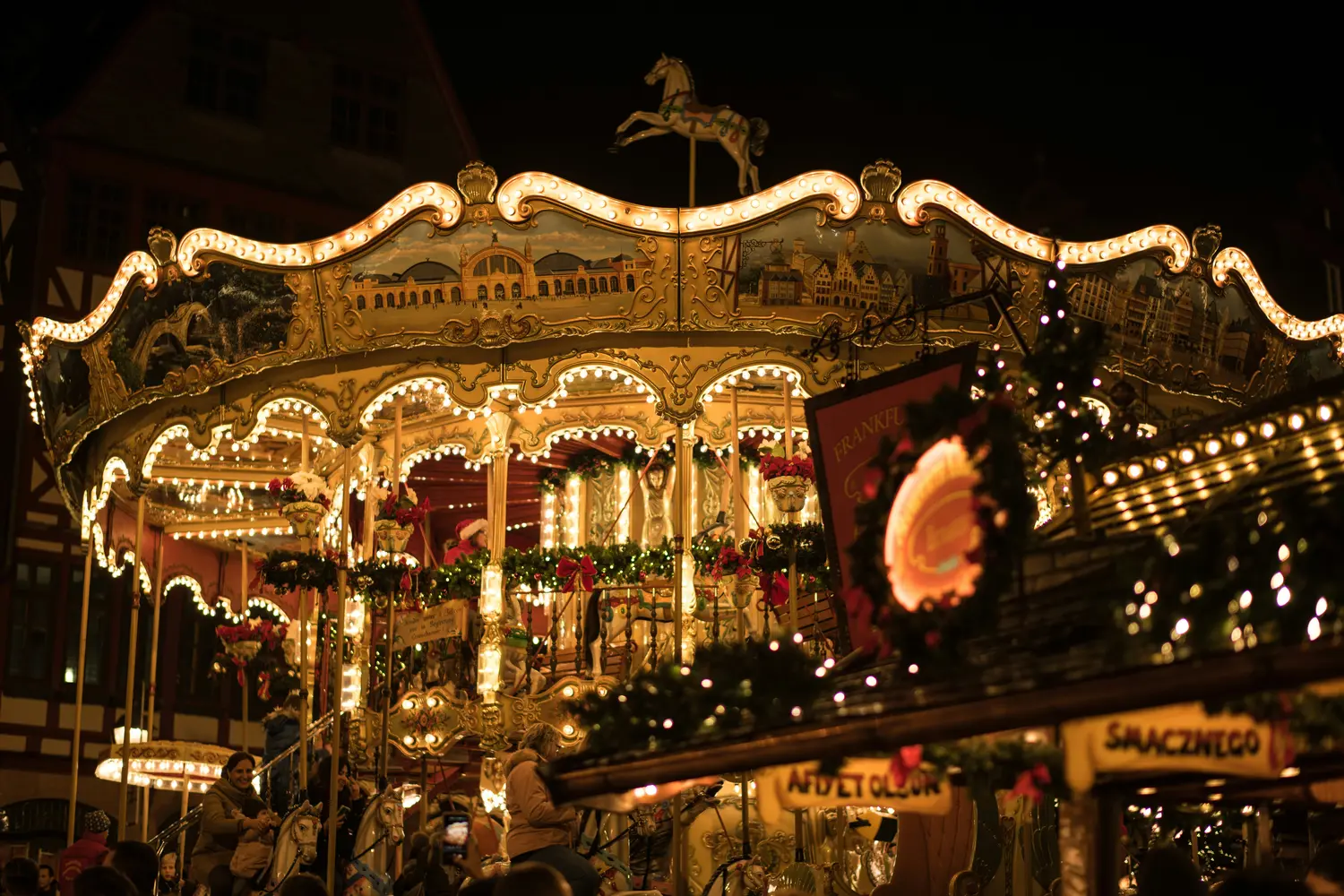
Read more: Europe's Christmas markets bring festive crafts, mulled wine, and centuries of tradition together across dozens of city centres from late November through December. 👉 Best Christmas Markets in Europe to Visit
9. Czechia - Christmas Eve Carp
When: 24 December
Many Czech families buy a live carp in the days before Christmas, and some keep it in the bathtub until the Christmas Eve meal. Presents are brought by Ježíšek, the baby Jesus, rather than Santa Claus.
10. Ukraine - Christmas Spider Decorations
When: throughout the Christmas season
A Ukrainian folk tale tells of a poor widow who couldn’t afford to decorate her tree. Overnight, spiders covered it in webs that shone silver and gold in the morning light. Spider and web ornaments are now hung on trees as symbols of good luck.
In 2023, Ukraine moved its official Christmas Day from 7 January to 25 December.
11. Norway - Hiding the Brooms
When: 24 December
Norwegian folklore says that witches and evil spirits come out on Christmas Eve and look for brooms to ride. Many households still hide their brooms and mops before going to bed.
Norway’s celebrations also feature kransekake, a towering cake made of almond rings stacked on top of each other.
12. Finland - The Hidden Almond
When: Christmas Eve and Christmas morning
A single almond is hidden in the Christmas rice porridge, riisipuuro. Whoever finds it in their bowl is said to have good luck in the year ahead. Denmark has a similar custom with its risalamande dessert. It’s easy to try at home.
13. France - Réveillon
When: 24 December
Réveillon is the long Christmas Eve dinner, traditionally eaten after midnight Mass. It often includes oysters, foie gras, a bûche de Noël (Yule log cake) and champagne. Children leave their shoes by the fireplace for Père Noël to fill. If you’re spending the season in France, see our Paris travel guide and our fun facts about France.
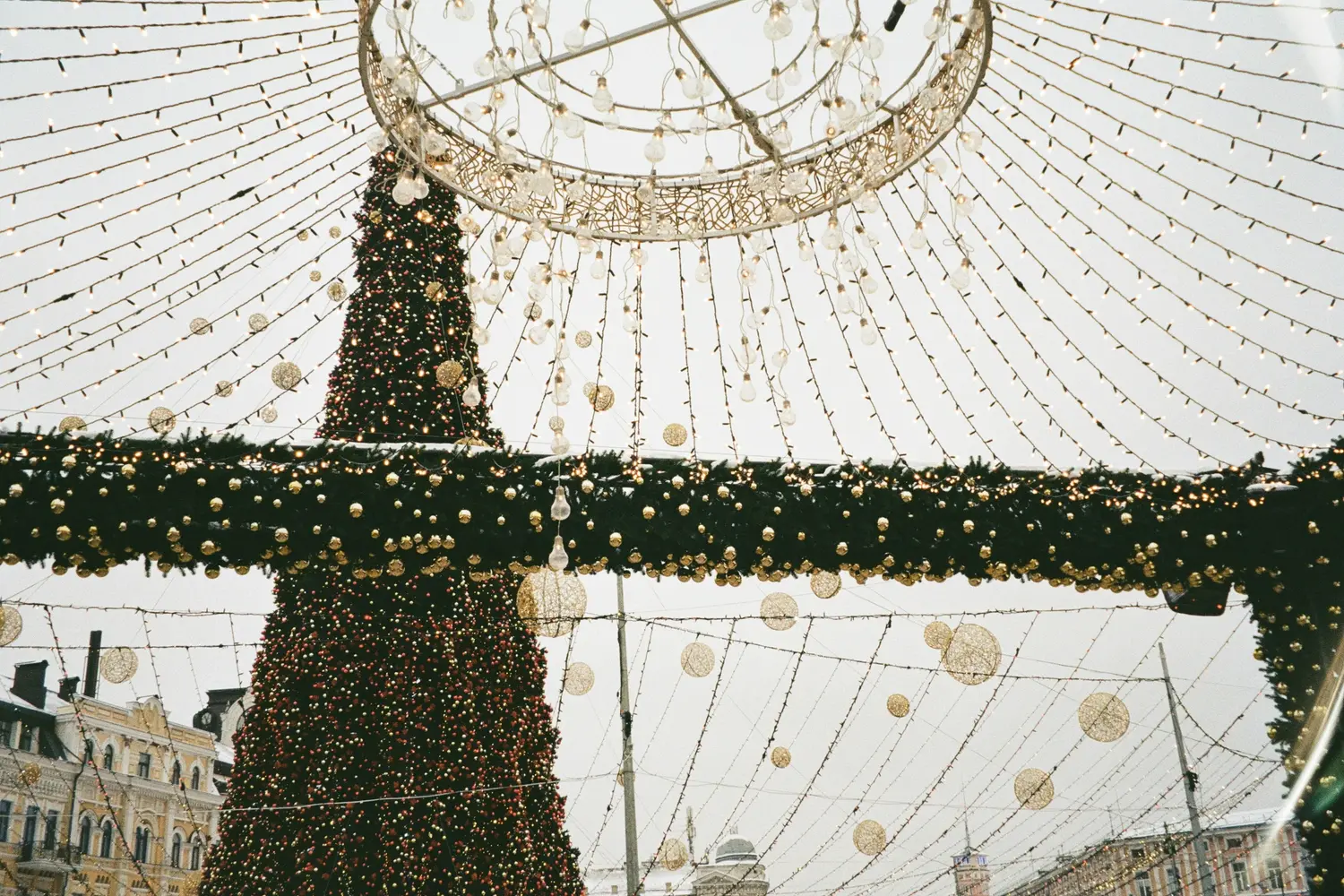
Read more: Germany's Christmas markets range from medieval Nuremberg to alpine Garmisch, offering mulled wine, handmade gifts, and centuries of festive tradition across the country. 👉 14 Magical Germany Christmas Markets You Must Visit
14. México - Las Posadas
When: 16–24 December | Where to see it: neighbourhoods across Mexico
For nine nights before Christmas, Las Posadas re-enacts Mary and Joseph’s search for shelter in Bethlehem. Candlelit processions move from house to house, singing a call-and-response song asking for lodging. Each night ends with piñatas, ponche (hot fruit punch) and sweet bread.
15. México - Night of the Radishes
When: 23 December | Where to see it: Oaxaca’s main square
On Noche de Rábanos in Oaxaca, artisans carve giant radishes into nativity scenes, local legends and detailed figures, and compete for prizes. The carvings only last a few hours before they start to wilt, so the evening has a real sense of occasion. For more on Mexico, see our guide to places to visit in Mexico and our fun facts about Mexico.
16. Venezuela - Roller-Skating to Christmas Mass
When: 16–24 December | Where to see it: Caracas
In Caracas, families roller-skate to early-morning Christmas Mass in the days before Christmas. Parts of the city are closed to traffic so skaters can travel safely.
17. Japan - KFC for Christmas
When: 24 December
A 1974 marketing campaign, “Kurisumasu ni wa Kentakkii” (“Kentucky for Christmas”), made fried chicken Japan’s most popular Christmas meal. Families pre-order Christmas buckets weeks ahead, and KFC records its highest sales of the year on Christmas Eve. Christmas isn’t a national holiday in Japan, so it’s celebrated more as a festive occasion than a religious one. See our fun facts about Japan.
18. Philippines - Giant Lantern Festival
When: December | Where to see it: San Fernando, Pampanga
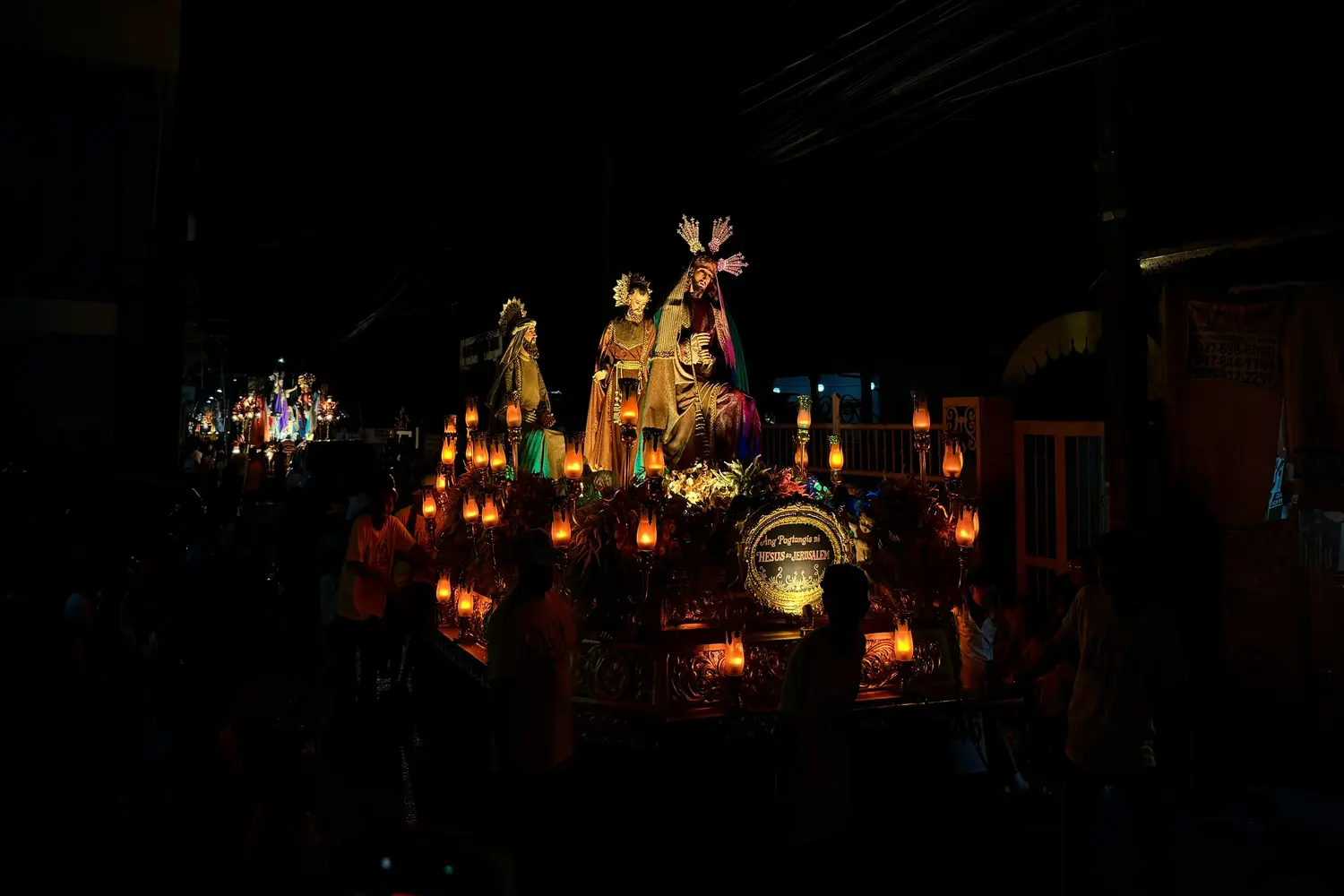
The Philippines has one of the world’s longest Christmas seasons, with decorations going up months before December. In San Fernando, the Giant Lantern Festival (Ligligan Parul) showcases star-shaped lanterns several metres wide, lit with thousands of synchronised lights.
Simbang Gabi, a series of nine dawn or evening Masses from 16 to 24 December, is one of the country’s most loved traditions. Learn more in our fun facts about the Philippines.
19. Australia - Christmas on the Beach
When: 25 December
Christmas falls in midsummer in Australia, so beach gatherings, seafood platters and outdoor carol concerts replace the fireside imagery of the Northern Hemisphere. Beaches such as Bondi in Sydney fill with families and friends on Christmas Day. Browse our fun facts about Australia for more.
Read more: The USA offers Christmas destinations from snowy New England to warm Gulf Coast beaches, with options suited to every family travel style and budget. 👉 Top 20 Places to Visit During Christmas in the USA
20. New Zealand - Summer Christmas Barbecues
When: 25 December
New Zealanders celebrate with barbecues (“barbies”), fresh seafood, pavlova and long light evenings outdoors. The pōhutukawa tree, which flowers bright red in December, is known as New Zealand’s Christmas tree. See our fun facts about New Zealand.
21. Colombia - Night of the Little Candles
When: 7 December | Where to see it: towns and cities across Colombia
On the eve of the Feast of the Immaculate Conception, families place candles and paper lanterns on balconies, pavements and in parks. Noche de las Velitas officially opens the Christmas season in Colombia.
22. Ethiopia - Christmas on January 7
When: 7 January
Ethiopia celebrates Christmas, called Ganna, on 7 January, following the Ethiopian Orthodox calendar. Many people attend services that begin before dawn, often dressed in white shamma, a traditional cotton wrap. Communal feasting follows. It remains a deeply spiritual celebration, separate from the commercial side of December.
23. United Kingdom - Christmas Crackers
When: 25 December
Two people pull a cracker until it snaps with a bang. The winner keeps the paper crown, the joke and the small toy inside. London confectioner Tom Smith invented crackers in the 1840s. Kissing under the mistletoe is another long-standing British custom.
24. United States - Stockings and Santa
When: 24–25 December
Stockings are hung by the fireplace for Santa Claus to fill on Christmas Eve, and many families open gifts in their pyjamas on Christmas morning. Some families hide a pickle-shaped ornament on the tree, and whoever finds it gets an extra gift, though no one is quite sure where the custom began. If you’d like to see the US at its most festive, see our guide to places to visit during Christmas in the USA.
25. Greece - Christmas Boats
When: throughout the Christmas season
Decorated and illuminated model boats, known as karavaki, are displayed in homes and harbour squares across Greece. They honour the country’s seafaring history, and in some homes they stand alongside the Christmas tree or replace it. See our fun facts about Greece.
Read more: December in Europe offers city breaks, snowy escapes, and festive culture across Alpine villages and coastal towns well beyond Christmas markets. 👉 15 Best Places to Travel in Europe in December: City Breaks & Snowy Escapes
26. Netherlands: Sinterklaas
When: 5–6 December
In the Netherlands, the main gift-giving day is the evening of 5 December, when Sinterklaas brings presents. Children leave their shoes out in the weeks before, hoping to find sweets inside. St. Nicholas Day on 6 December is also celebrated in Germany, Poland and other parts of Europe.
St. Nicholas was a bishop of Myra, in present-day Türkiye, and he inspired the figure of Santa Claus. See our fun facts about the Netherlands.
27. Ireland: Wren Day
When: 26 December
On St. Stephen’s Day, children and “wren boys” dress up and carry a fake wren from house to house, singing and collecting sweets or coins. The tradition is strongest in rural Ireland. If you’re planning a trip, see our Ireland travel guide for first-time visitors.
28. Canada: Letters to Santa
When: by mid-December
Santa has a real mailing address in Canada: Santa Claus, North Pole, H0H 0H0. Letters need no stamp, and Santa replies in more than 30 languages, including Braille. Check Canada Post for the 2026 deadline. See our fun facts about Canada.
29. Puerto Rico: Parrandas
When: December to January
Parrandas are lively, musical Christmas gatherings, similar to carolling. Groups of friends arrive at a home, often late at night, sing until they’re let in, then move on to the next house with the hosts in tow. The season continues to Three Kings Day on 6 January. See our guide to the best time to visit Puerto Rico.
30. South Africa: The Christmas braai
When: 25 December
Christmas falls in summer in South Africa, so many families gather for a braai, the South African barbecue, on Christmas Day. Many also attend Christmas services. Shopping centres are often decorated with African crafts, such as woven baskets, alongside the usual lights.
Where to experience Christmas traditions in December and January
If you’d like to see some of these traditions in person, this calendar shows when they take place.
| Date | Tradition | Where |
|---|---|---|
| 5 December | Krampus parades | Salzburg and Alpine towns |
| 5 December | Sinterklaas gift evening | Netherlands |
| 7 December | Night of the Little Candles | Colombia |
| 13 December | St. Lucia Day | Sweden |
| 16–24 December | Las Posadas, Simbang Gabi, roller-skating to Mass | Mexico, Philippines, Caracas |
| 22 December | El Gordo draw | Spain |
| 23 December | Night of the Radishes | Oaxaca, Mexico |
| 26 December | Wren Day | Ireland |
| 5–6 January | La Befana, Three Kings Day | Italy, Spain and Latin America |
| 7 January | Ganna and Orthodox Christmas | Ethiopia, Serbia, Georgia |
Dates for local events can change from year to year, so check with the tourism office before you travel. For destination ideas, see our guides to the best places to travel in Europe in December and the best Christmas markets in Europe.
How Christmas Traditions Differ Around the World
Gift-bringers. Santa Claus isn’t the only one who delivers presents:
- La Befana in Italy, on 5 January
- the Three Kings in Spain and Latin America, on 6 January
- the 13 Yule Lads in Iceland
- Ježíšek in Czechia
- the Christkind in Germany
- Sinterklaas in the Netherlands
Christmas food. The Christmas meal varies just as widely: KFC in Japan, carp in Czechia, twelve meatless dishes in Poland, Réveillon in France and the Feast of the Seven Fishes among Italian families.
Dates. Not everyone celebrates on 25 December. Ethiopia celebrates on 7 January under its own calendar. Orthodox Christians in Serbia, Russia and Georgia also celebrate on 7 January, following the Julian calendar.
Christmas in summer. In Australia, New Zealand, South Africa and much of South America, Christmas means beaches, barbecues and long evenings outdoors. For warm-weather ideas, see where is hot in December.
How to say Merry Christmas around the world
| Language | Merry Christmas |
|---|---|
| German | Frohe Weihnachten |
| French | Joyeux Noël |
| Spanish | Feliz Navidad |
| Italian | Buon Natale |
| Portuguese | Feliz Natal |
| Dutch | Vrolijk kerstfeest |
| Swedish and Norwegian | God Jul |
| Finnish | Hyvää joulua |
| Icelandic | Gleðileg jól |
| Polish | Wesołych Świąt |
| Czech | Veselé Vánoce |
| Greek | Kalá Christoúgenna |
| Filipino | Maligayang Pasko |
| Irish | Nollaig Shona |
| Japanese | Merii Kurisumasu |
Christmas traditions for the family to try at home
You don’t need to travel to bring global customs home. Here are a few easy ideas:
- Make an Advent calendar inspired by the German original.
- Hide an almond in a rice pudding, as families do in Finland.
- Host an international Christmas dinner with dishes from Poland, France and Japan.
- Make paper lanterns inspired by Colombia’s Night of the Little Candles.
- Write to Santa in Canada and see if he replies.
- Learn how to say Merry Christmas in a new language each year.
For trip ideas with children, see our guide to Christmas family vacations.
Stay connected while you travel this Christmas
If you’re travelling to see any of these traditions, mobile data helps with maps, transport apps, translation and restaurant bookings. A Jetpac eSIM installs before you leave and connects to local 4G and 5G networks when you land, with no SIM swap needed. Compare options in our guide to the best eSIM apps for international travel.

FAQs
What are some unique Christmas traditions around the world?
Austria’s Krampus, Catalonia’s Caga Tió, Iceland’s Yule Lads and Yule Cat, Oaxaca’s Night of the Radishes and roller-skating to Mass in Caracas are some of the most unusual.
How is Christmas celebrated in different countries?
It varies with religion, climate and local folklore. Some countries focus on Christmas Eve dinners, as in Poland and France. Others hold processions, as in Mexico and the Philippines, or outdoor summer celebrations, as in Australia and South Africa.
Which countries celebrate Christmas on 7 January?
Ethiopia celebrates Ganna on 7 January under the Ethiopian Orthodox calendar. Orthodox Christians in Serbia, Russia and Georgia also celebrate on 7 January, following the Julian calendar. Ukraine moved its official Christmas to 25 December in 2023.
Which countries celebrate Christmas in summer?
Australia, New Zealand, South Africa, Brazil and Argentina all celebrate Christmas in summer, often with beach gatherings and barbecues.
Who brings Christmas presents in different countries?
Santa Claus in the US, UK and Australia, La Befana in Italy, the Three Kings in Spain and Latin America, the Yule Lads in Iceland, Ježíšek in Czechia, the Christkind in Germany and Sinterklaas in the Netherlands.
What are some Catholic Christmas traditions around the world?
Las Posadas in Mexico, Simbang Gabi in the Philippines, nativity scenes in Italy and Spain, midnight Mass, the Feast of the Seven Fishes among Italian families, and Three Kings Day in Spain and Latin America.
What are some unusual Christmas foods around the world?
KFC in Japan, Christmas Eve carp in Czechia, the twelve-dish Wigilia in Poland and Réveillon in France.
Why is Christmas celebrated differently around the world?
Local religion, climate, folklore, history and even marketing have shaped how each country celebrates. That’s why the same holiday can look so different from one place to the next.
Disclaimer
The information in this blog was accurate at the time of writing. Christmas traditions and local customs may vary by region and can change over time. Jetpac is not responsible for changes made after publication.
Get connected as soon as you land with a Jetpac travel eSIM.