Best Christmas Markets in Europe 2026: Dates, Prices & Local Picks
Discover how to choose the best Christmas markets in Europe, from charming old towns to iconic cities, and make your winter getaway truly magical!
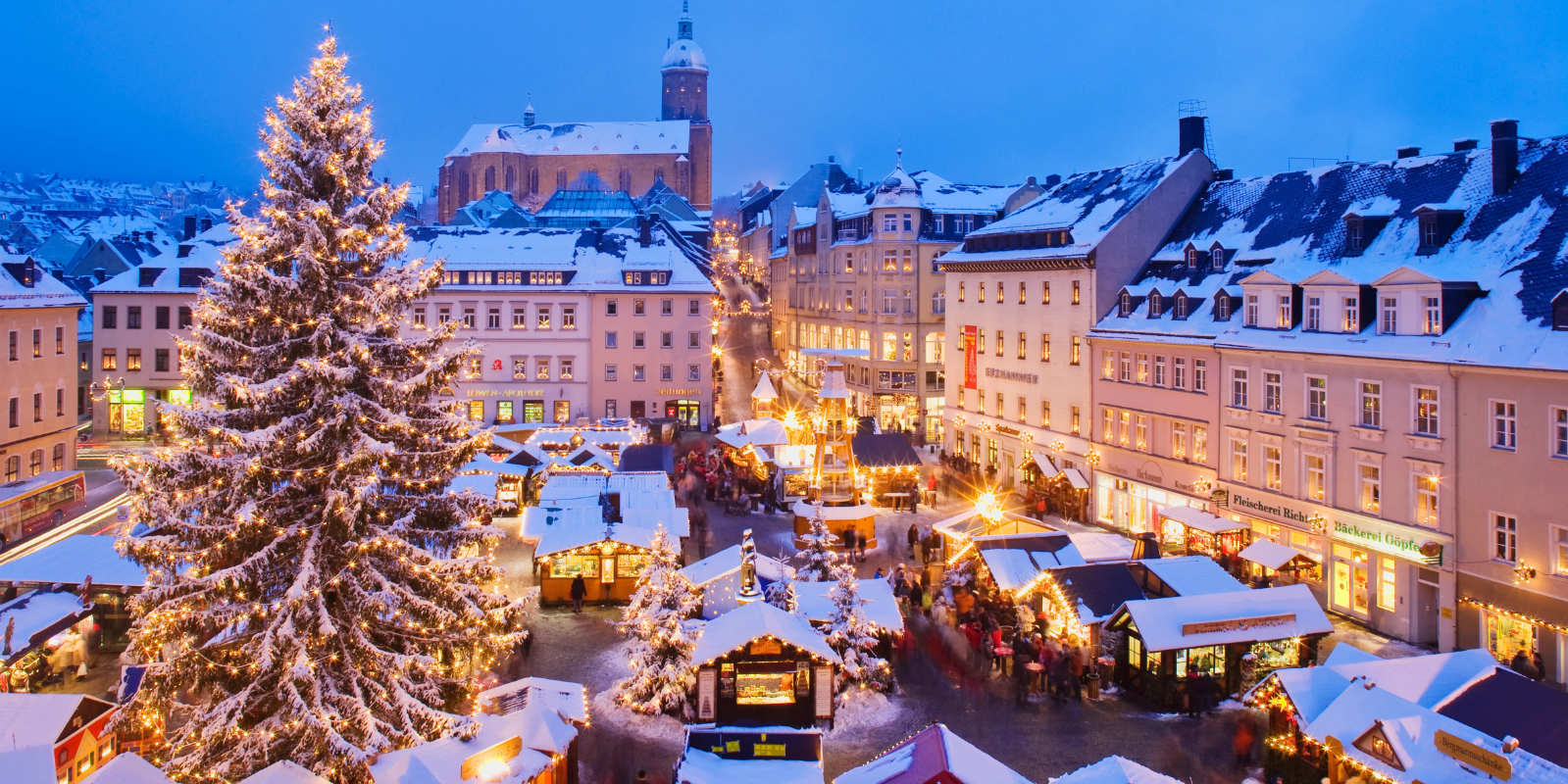
The best Christmas markets in Europe in 2026 start opening in mid-November, with Vienna, Budapest and Copenhagen’s Tivoli first on 13 November. We compared [30+] markets across [14] countries by 2026 dates, entry cost, food, crowds and who each one suits, from classics like Vienna and Strasbourg to quieter picks like Colmar and Tallinn. Planning your wider trip? Read our guides to the best places to travel in Europe in December, other places to go for Christmas and Christmas traditions around the world.
Not sure where to start? Use the quick-pick table, check the 2026 dates table, then jump to the country sections for hours, prices and what to eat.
Quick picks: the best Christmas market for you
If you want… | Go to | Why |
|---|---|---|
A first Christmas market trip | Strasbourg and Colmar | France’s oldest market (since 1570), 300+ chalets, and Colmar is about 30 minutes away by train |
A romantic city break | Vienna or Salzburg | Grand squares, ice skating, concerts and a big city to enjoy between markets |
A trip with children | Nuremberg or Cologne | Nuremberg’s Kinderweihnacht and Cologne’s Heinzel’s Wintermärchen with its large ice rink |
A budget trip | Budapest, Zagreb, Vilnius or Tallinn | Central and Eastern Europe is generally cheaper than Vienna, Strasbourg or London |
Gifts and handcrafts | Nuremberg, Dresden or Strasbourg | Strong local craft traditions: Lebkuchen, Stollen, Erzgebirge wooden figures |
A market open on Christmas Day | Salzburg, Prague, Budapest or Berlin’s Gendarmenmarkt | Most German markets close on Christmas Eve |
A market after Christmas | Prague, Tallinn, Zagreb, Brussels, Bruges or Tivoli | All run into early January |
A small-town feel | Colmar, Bruges or Valkenburg | Compact, walkable and less commercial than the capitals |
A short trip from the UK | Brussels, Bruges, Lille or Cologne | All reachable by Eurostar, directly or with one change |
Vegan-friendly food | Budapest, Berlin or London | Easier to find plant-based options in larger cities |
Christmas markets in Europe 2026: opening dates
Sorted by opening date. Always confirm on the official site, as closing dates can change.
Market | Opens | Closes | Notes |
|---|---|---|---|
Vienna (Rathausplatz) | 13 Nov | 26 Dec | Schönbrunn and Prater markets run to 6 Jan |
Budapest (Vörösmarty tér) | 13 Nov | 31 Dec | Main markets open Christmas Day |
Copenhagen (Tivoli) | 13 Nov | 3 Jan | Ticket required |
Edinburgh (East Princes Street Gardens) | 14 Nov | 3 Jan | |
Cologne (Cathedral) | 16 Nov | 23 Dec | |
Bern | 19 Nov | 27 Dec | Closed Christmas Day |
Salzburg | 19 Nov | 1 Jan [verify] | Open Christmas Day |
London (Winter Wonderland) | 19 Nov | 3 Jan | Entry fee applies |
Bruges (Winter Glow) | 20 Nov | 3 Jan | |
Tallinn | 20 Nov | 6 Jan | |
Munich (Marienplatz) | 20 Nov | 24 Dec | Closes 2 pm on 24 Dec |
Berlin | 23 Nov | 4 Jan | Varies by market |
Dresden (Striezelmarkt) | 25 Nov | 24 Dec | Closes 2 pm on 24 Dec |
Colmar | 25 Nov | 29 Dec | |
Basel | 26 Nov | 23 Dec | |
Brussels (Winter Wonders) | 27 Nov | 3 Jan | |
Strasbourg | 27 Nov | 24 Dec | Some markets run to 27 Dec |
Nuremberg (Christkindlesmarkt) | 27 Nov | 24 Dec | Closes 2 pm on 24 Dec |
Prague (Old Town Square) | 28 Nov | 6 Jan | Open Christmas Day |
Zagreb (Advent Zagreb) | 28 Nov | 7 Jan | |
Vilnius (Cathedral Square) | 28 Nov | 27 Dec | |
Amsterdam | 3 Dec | 27 Dec |
Europe’s Must-See Christmas Markets by Country and City
Every country has its own version of the Christmas market, a beloved winter tradition in Europe. Here are some of the best European Christmas markets to add to your Christmas travel list:
Germany
Germany has the deepest tradition, and most markets close on or just before Christmas Eve, so plan a pre-Christmas trip. For a deeper dive, read our full guide to the best Germany Christmas markets.
Berlin
Berlin has 100+ markets, so choose by mood and plan by neighbourhood.
Gendarmenmarkt: Berlin’s most upscale market, set between the German and French cathedrals [confirm 2026 location]. Expect white tents, artisan crafts, gourmet food and live choirs and acrobatics. Late Nov–31 Dec [verify] · 11 am–10 pm · about €2 entry (under-12s usually free) · Try: roasted almonds, bratwurst, Eierpunsch.
Breitscheidplatz: beside the Kaiser Wilhelm Memorial Church, with lights, handmade ornaments and an ice rink nearby. Free · 11 am–9 pm · Try: currywurst, gingerbread hearts, Kinderpunsch.
Rotes Rathaus: ice rink, a vintage Ferris wheel and dozens of wooden stalls by Alexanderplatz. Free entry (rides and skating cost extra) · 12 pm–10 pm · Try: crêpes, baked apples, hot chocolate.
Heissa Holzmarkt: a quieter riverside option in Friedrichshain with handmade gifts, street food and fire barrels. Mostly weekends and it closes before Christmas, so check days before you go.
The catch: Berlin is large and markets are spread out. Pick two or three and group them by area. Our guide to using Berlin’s public transport helps, and our best things to do in Berlin covers what to do between markets.
Cologne
Cathedral Market (Roncalliplatz): 100+ stalls at the foot of a UNESCO-listed cathedral, with live music and handmade ornaments. 16 Nov–23 Dec · 11 am–9 pm (Fri and Sat to 10 pm) · Free · Try: Reibekuchen, Glühwein in a collectible mug.
Heinzel’s Wintermärchen (Heumarkt): a playful market themed on Cologne’s gnome folklore, with one of the larger ice rinks among the city’s markets. Free.
Market of Angels (Neumarkt): angel decorations and lights, popular with couples. Free.
The catch: the Cathedral market is very busy. Go on a weekday.
Munich
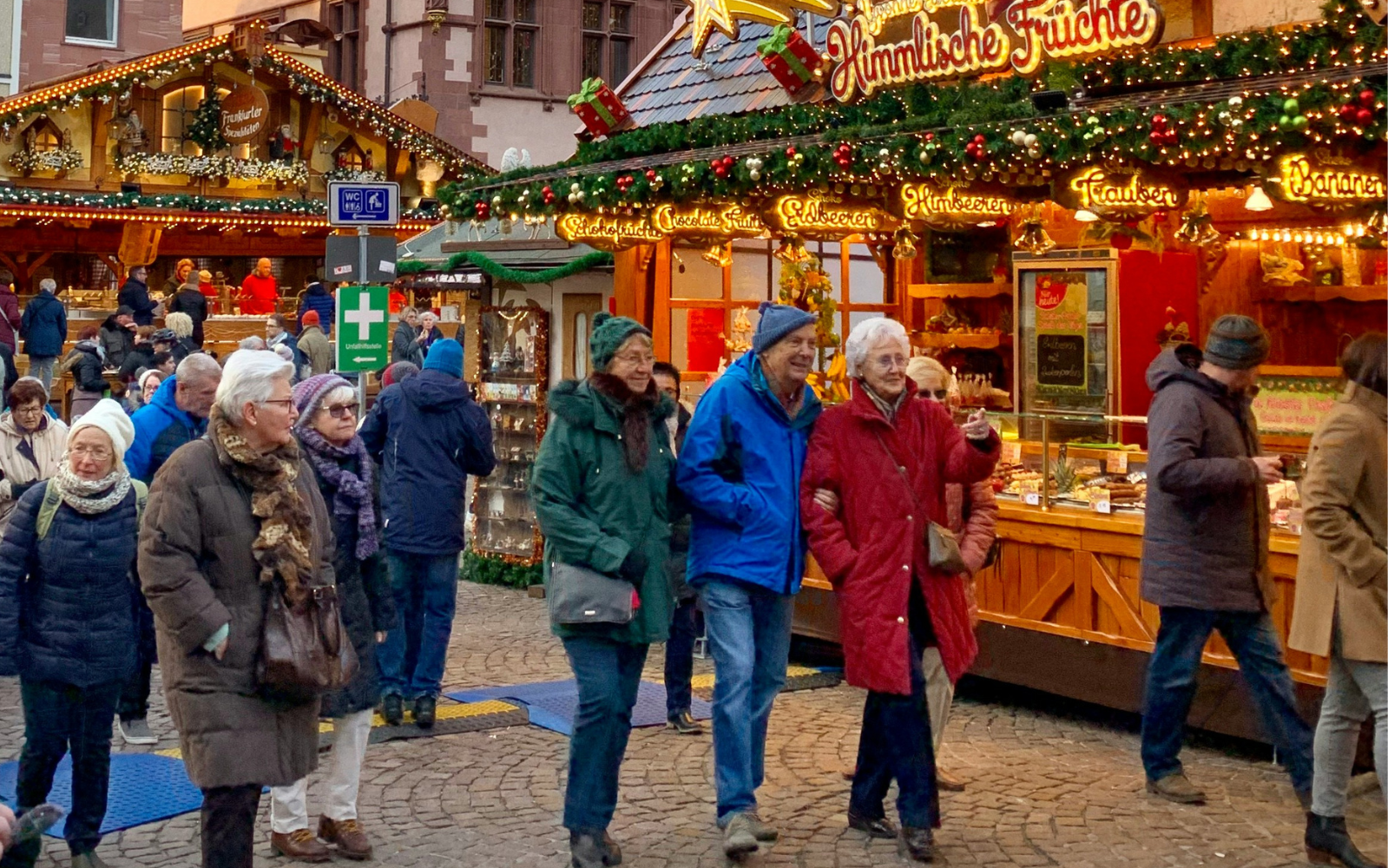
The main market fills Marienplatz in front of the neo-Gothic Neues Rathaus. 20 Nov–24 Dec · Time your visit for the 11 am or noon Glockenspiel · Try: Kaiserschmarrn, Lebkuchen, hand-carved Bavarian figurines. It closes at 2 pm on Christmas Eve, and Salzburg is only about two hours away, so the two pair well. For more ideas, see our guide to things to do in Munich.
Dresden
Striezelmarkt (Altmarkt) dates back to 1434, making it one of the world’s oldest Christmas markets, and it is named for Stollen. Look for the giant Erzgebirge pyramid and enjoy a more local crowd than at the big international names. 25 Nov–24 Dec · 10 am–9 pm · Free · Try: Stollen, Eierpunsch, Dresdner Handbrot. After it closes, the Neumarkt and Augustusmarkt markets continue to 3 January.
Nuremberg
Christkindlesmarkt (Hauptmarkt) is the classic: red-and-white striped stalls, a Christkind who opens the market, and handcrafted goods. 27 Nov–24 Dec · 10 am–9 pm (Sundays to 8 pm) · Free · Try: Nürnberger bratwurst, Lebkuchen, Feuerzangenbowle. For children, head to the Kinderweihnacht for rides and craft stalls.
The catch: it closes at 2 pm on Christmas Eve and does not reopen.
Hamburg
The Rathausmarkt market lights up in front of the town hall and has a toy street, the Spielzeuggasse, that children love. [Add 2026 dates, hours and entry.]
Austria
Vienna
Wiener Christkindlmarkt (Rathausplatz): the biggest in the city, in front of the neo-Gothic town hall, with a giant tree, an ice rink winding through the trees and horse-drawn carriages on the Ringstraße. 13 Nov–26 Dec · 10 am–9:30 pm (Fri and Sat to 10 pm) · Free · Try: Käsekrainer, roasted chestnuts, gingerbread, Glühwein.
Stephansplatz: a smaller market in front of St Stephen’s Cathedral. 11 am–9 pm · Free.
Worth knowing: Schönbrunn Palace and the Prater run as New Year markets to 6 January, which makes Vienna good for the days between Christmas and New Year. Evenings and weekends are busy.
Salzburg
The main market fills Residenzplatz and Domplatz in the Old Town, with the cathedral behind the stalls. 19 Nov–1 Jan [verify, as our previous edition said 26 Dec] · 10 am–8:30 pm · Free · Try: Salzburger Nockerl, roasted chestnuts, bratwurst. It is open on Christmas Day, which is rare.
Czech Republic
Prague
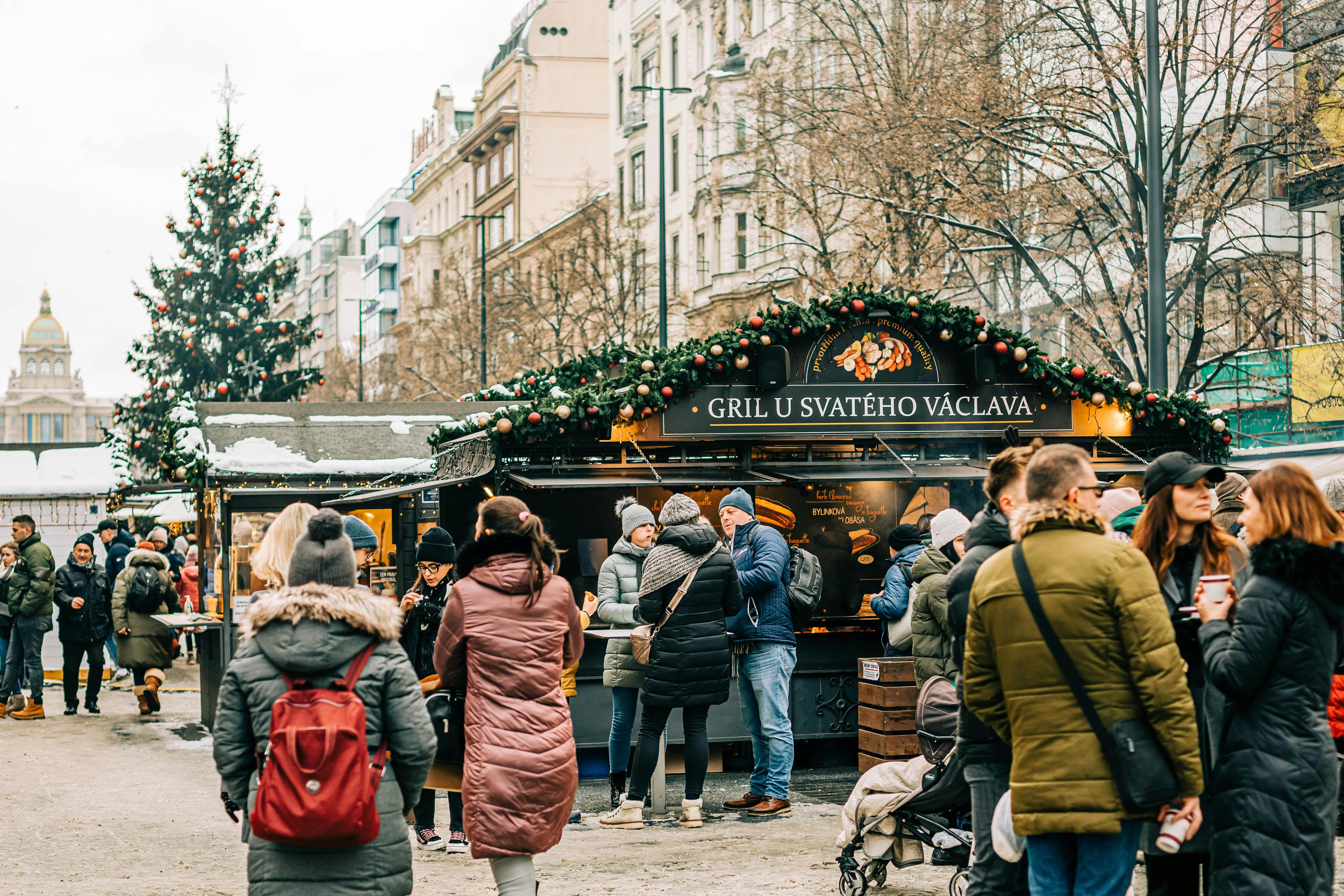
Old Town Square and Wenceslas Square are the two main markets, with the Astronomical Clock and Gothic spires behind the Old Town one. 28 Nov–6 Jan · 10 am–10 pm · Free · Try: trdelník, svařák (mulled wine), sausages. Open on Christmas Day.
The catch: the Old Town is crowded and food and drink can be pricey. Go in early December or on a weekday.
Hungary
Budapest
Vörösmarty tér: elegant wooden stalls and Budapest’s best-known market. 13 Nov–31 Dec · 10 am–8 pm (Fri and Sat to 9 pm) · Free · Try: kürtőskalács (chimney cake), lángos, goulash in a bread bowl.
Advent Basilica: a market in front of St Stephen’s Basilica with a light show projected on the façade. 10 am–10 pm · Free.
Worth knowing: both main markets are open on Christmas Day and Boxing Day, and the city is cheaper overall than most on this list. Market food itself is not cheap, so eat a few meals away from the stalls. Browse things to do in Budapest for ideas.
France
Strasbourg
The self-styled Capitale de Noël has held a market since 1570. Over 300 chalets fill squares across the Grande Île, including Place Kléber with its giant tree and Place de la Cathédrale. 27 Nov–24 Dec (some markets to 27 Dec) · 10 am–8 pm · Free · Try: tarte flambée, vin chaud, pain d’épices.
The catch: it is very busy and hotel prices jump in market season, so book early. Our France travel guide covers the rest of your trip.
Colmar
Smaller and quieter than Strasbourg, with six markets and about 180 stalls among half-timbered houses. 25 Nov–29 Dec · Free. Direct trains from Strasbourg take about 30 minutes, so you can do both in a weekend.
Belgium
Brussels
Winter Wonders has 250+ chalets around the Grand Place, Rue de la Bourse, Place Sainte-Catherine and Marché aux Poissons, plus an ice rink and a big tree. 27 Nov–3 Jan · 12 pm–10 pm · Free · Try: Belgian waffles, speculoos, mulled wine and Belgian beer.
Bruges
Winter Glow fills the Markt with chalets, ice rinks and a light trail along the canals. 20 Nov–3 Jan. Eurostar to Brussels, then a local train.
Switzerland
Basel and Bern
Two pretty old towns an hour apart by train. In Basel (26 Nov–23 Dec), Münsterplatz is the prettier square and Barfüsserplatz the busier, with a big pyramid. Try Basler Läckerli. In Bern (19 Nov–27 Dec), the Sternenmarkt sits on the Kleine Schanze by the Bundeshaus. Try raclette. The catch: Switzerland is expensive. Read more in our guide to Switzerland in winter travel.
Denmark
Copenhagen
Tivoli Gardens becomes a winter wonderland with over a million lights, themed stalls and the rides running. 13 Nov–3 Jan · 11 am–11 pm ·
The catch: entry is not free and Copenhagen is pricey. Free street markets close before Christmas.
Poland
Gdańsk
The market spreads across Targ Węglowy (Coal Market), Tkacka Street and the Forum Gdańsk courtyard, with a giant Advent calendar, a Venetian carousel, an ice rink and a tree near Neptune’s Fountain. [Add 2026 dates and hours] · Free · Try: pierogi, grzane wino, Baltic amber jewellery.
Kraków
The market fills Rynek Główny, between the Cloth Hall and St Mary’s Basilica, with choirs and Polish food. [Add 2026 dates.]
Estonia, Latvia, Lithuania and Croatia
Tallinn (Town Hall Square): a medieval Old Town setting and one of the longest seasons. 20 Nov–6 Jan · 10 am–7 pm · Free · Try: black pudding, gingerbread, glögg.
Riga (Doma Square): a light trail through the Old Town and local gingerbread. [Add 2026 dates.]
Vilnius (Cathedral Square): named European Capital of Christmas 2025. 28 Nov–27 Dec.
Zagreb (Advent Zagreb): spread through the city with elaborate lights and an Ice Park, and it has been voted best in Europe more than once. 28 Nov–7 Jan.
Netherlands
Amsterdam
Markets pop up across the centre, including Museumplein, Rembrandtplein and Leidseplein, alongside the Museumplein ice rink. 3–27 Dec · Free · Try: stroopwafels, poffertjes. Find more in our guide to things to do in Amsterdam
United Kingdom
London
Winter Wonderland (Hyde Park) has the UK’s largest outdoor ice rink, rides and market stalls. 19 Nov–3 Jan · Entry in 2026: £1 off-peak, £5.50 standard, £8.25 peak [verify]. For free options, try the Covent Garden Piazza and its giant tree, London Bridge and the Southbank. Our London travel tips help you plan the rest of your trip.
Edinburgh
The market sits in East Princes Street Gardens, beneath the castle. Explore more of the best places to visit in Scotland too. 14 Nov–3 Jan.
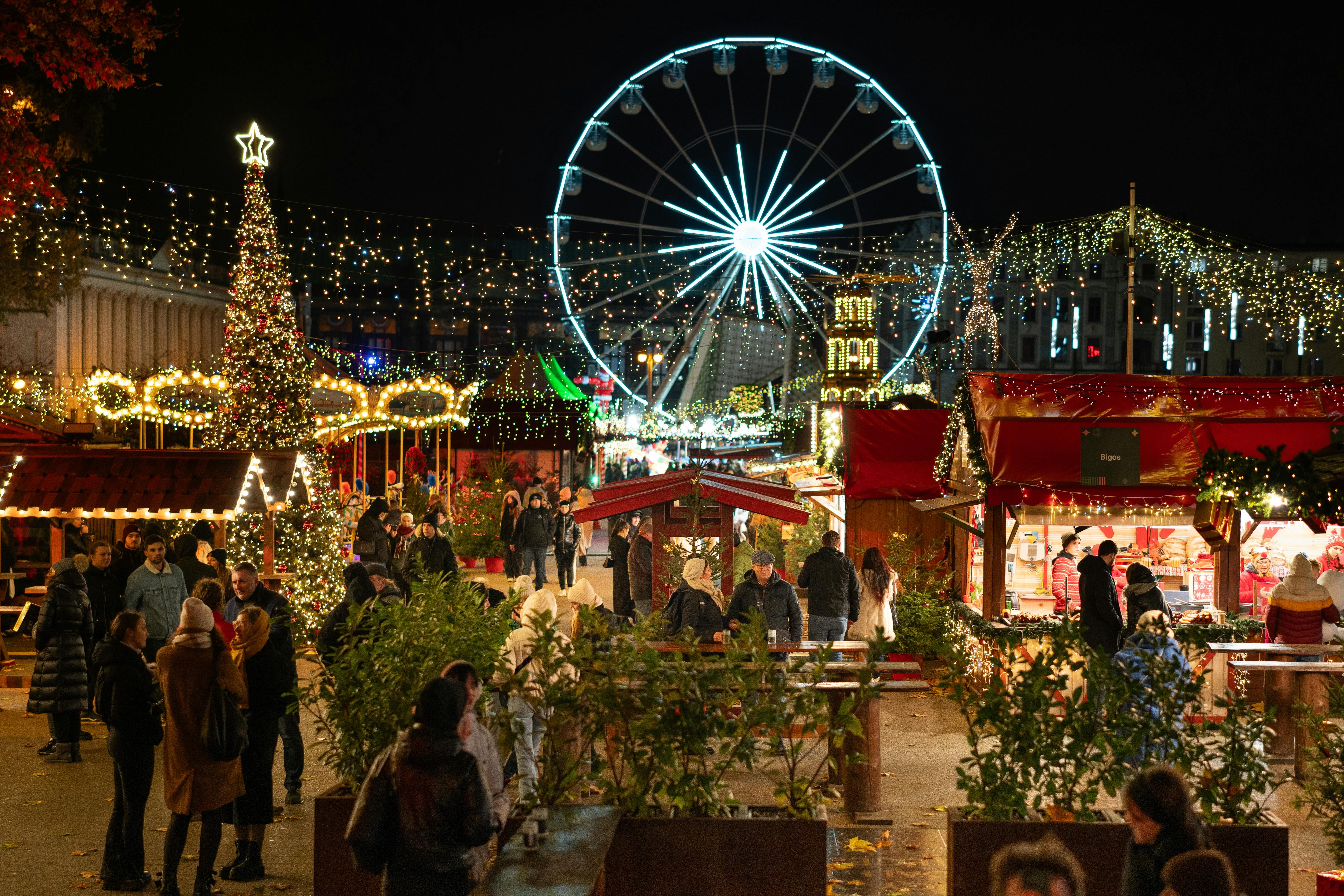
Off the beaten path
- Valkenburg, Netherlands: underground markets in the Gemeentegrot and Fluweelengrot caves.
- Ahrweiler, Germany: a small walled wine town with a market on Advent weekends (Fri–Sun) [verify 2026 dates].
- Rothenburg ob der Tauber and Hann. Münden, Germany: half-timbered towns with intimate markets.
- Poznań, Poland: an authentic market mostly visited by locals.
Open on Christmas Day, or after Christmas
- Open on Christmas Day: Salzburg, Prague, Budapest and Berlin’s Gendarmenmarkt (noon to 10 pm).
- Running into January: Prague, Tallinn, Zagreb, Brussels, Bruges, Tivoli, Edinburgh and London’s Winter Wonderland.
- Between Christmas and New Year: Vienna’s Schönbrunn and Prater markets (to 6 Jan) and Dresden’s Neumarkt and Augustusmarkt (to 3 Jan).
How much does a Christmas market trip cost?
Typical ranges, so confirm locally:
- Mulled wine: about €4–4.50, plus a mug deposit of a few euros.
- Sausage in a roll: about €6. A small meal at a stall: €10–15.
- Central hotel in market season: €100–150 a night, and up to about €200 in expensive cities. Book months ahead.
- Entry: most markets are free. Tivoli, Winter Wonderland and Berlin’s Gendarmenmarkt charge.
Cheapest: Budapest, Zagreb, Vilnius, Tallinn and Poland. Priciest: Vienna, Strasbourg, Copenhagen, London and Switzerland. Food prices vary less than hotel prices, so accommodation decides most budgets.
For more, see how to travel Europe on a budget and how much a trip to Europe typically costs.
Tips for visiting
- Go early and midweek. Early December and weekdays are the quietest, and the final week before Christmas is the busiest.
- Check closing dates. German markets usually close by Christmas Eve, while Austria and Central Europe often run into the new year.
- Carry cash. Most markets take cards, but small stalls often prefer cash for snacks and drinks.
- Understand the mug deposit (Pfand). Your Glühwein mug carries a deposit, and you must return it to the same market to get it back, or keep it as a souvenir.
- Dress for it. Pack warm layers, a waterproof coat, hat, gloves, comfortable shoes and a small crossbody bag. Our winter Europe packing list has the full checklist for your trip.
- Expect weather, not snow. It can be damp and grey, so plan indoor stops.
Staying connected on your Christmas market trip
You’ll lean on your phone for maps, translating menus, e-tickets for places like Tivoli and Winter Wonderland, and sharing photos. UK and other networks may charge roaming fees in Europe (here’s how EE roaming in the EU works for UK customers), so check yours before you leave. Learn how to avoid roaming charges, check whether your phone will work in Europe and work out how much mobile data you need for travel.
An eSIM for Europe lets you move easily between countries without swapping SIM cards. It’s useful on routes like Prague → Vienna → Salzburg. First check that your iPhone is unlocked for eSIM use, then install the eSIM before departure, then switch it on when you land. eSIMs are data-only, so use WhatsApp or similar for c
FAQs
When do Christmas markets open in Europe in 2026? The earliest open in mid-November: Vienna, Budapest and Tivoli on 13 November, then Cologne on 16 November. Most others open in the last week of November.
What is the best time to visit? Late November to mid-December. Early December and weekdays are quietest. For other seasons, read our guide to the best time to visit Europe.
Which Christmas markets are open on Christmas Day? Salzburg, Prague, Budapest and Berlin’s Gendarmenmarkt. Most German markets close on Christmas Eve.
Which are open after Christmas? Prague, Tallinn, Zagreb, Brussels, Bruges, Tivoli and Winter Wonderland run into January. Vienna’s Schönbrunn and Prater markets run to 6 January.
Which country has the best Christmas markets? Germany is the traditional favourite, thanks to centuries-old markets in Nuremberg, Dresden, Cologne and Munich. Austria, France and Czechia are strong alternatives.
What is the most Christmassy city in Europe? Vienna is often given the title, with markets at Rathausplatz, Schönbrunn and elsewhere. Strasbourg’s official nickname is the Capital of Christmas.
What is the cheapest city for Christmas markets? Budapest, Zagreb, Vilnius and Tallinn are generally cheaper than Vienna, Strasbourg or London. Accommodation is the biggest cost.
Which Christmas markets are best for families? Nuremberg (Kinderweihnacht), Cologne (Heinzel’s Wintermärchen) and Brussels, which are compact with rides, rinks and crafts.
How many days do you need? A weekend of two or three nights suits most cities. Big cities like Vienna reward three or four.
Do I need cash? Carry some. Cards work at most stalls, but small vendors often prefer cash.
Do I need an eSIM? Not strictly, but it saves roaming fees and SIM swaps when you’re navigating, translating and posting photos all day.
Get connected as soon as you land with a Jetpac travel eSIM.